
Lifestyle
28 Years after Gen. Sani Abacha’a death…

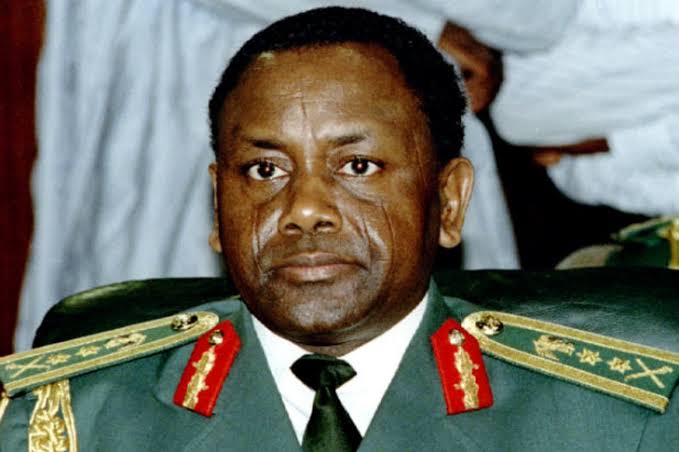
Today marks 28 years since the death of Nigeria’s former Head of State, General Sani Abacha, a figure whose rule remains one of the most controversial chapters in the country’s history.
General Sani Abacha (1943–1998) led Nigeria as military Head of State from 1993 until his sudden death in 1998.
His administration continues to divide opinion, remembered by some for economic stabilisation efforts, and by others for its harsh authoritarian rule and widespread human rights abuses.
Rise to Power
Abacha had a long and influential military career, playing key roles in several successful coups in Nigeria’s political history, including the 1983 and 1985 takeovers. In November 1993, following the annulment of the June 12 presidential election and a period of deep political uncertainty, he seized power in a bloodless coup that removed the interim government.
Once in office, he suspended the constitution, banned political activities, and installed military administrators across the states, effectively tightening the military’s grip on governance.
Economic Policies and Claims of Stability
Supporters of his administration often point to certain economic measures credited with stabilising key indicators at the time.
These include efforts said to have helped reduce external debt pressure, strengthen foreign reserves, and stabilise the naira within a controlled environment.
However, these claims remain widely debated, as they unfolded under a heavily controlled political and economic system.
Human Rights Record
Abacha’s rule is also widely remembered for its intolerance of dissent. Political opposition was suppressed, media freedom was heavily restricted, and civil liberties were frequently violated.
One of the most internationally condemned incidents of his regime was the 1995 execution of environmental activist Ken Saro-Wiwa and eight other Ogoni leaders, popularly known as the “Ogoni Nine.” The event triggered global outrage and led to Nigeria’s suspension from the Commonwealth.
The Abacha Loot and Corruption Allegations
His administration has also been linked to massive financial misconduct. Investigations over the years allege that billions of dollars—estimated between $3 billion and $5 billion—were siphoned from public funds and hidden in foreign accounts. These funds, commonly referred to as the “Abacha loot,” have continued to be recovered in parts by successive Nigerian governments.
Death and Legacy
General Abacha died suddenly in June 1998 at the Presidential Villa in Abuja. His death marked the end of military rule under his leadership and set the stage for Nigeria’s transition to democratic governance in 1999.
More than two decades later, his legacy remains deeply contested, reflecting both the stability some associate with his tenure and the authoritarian excesses that defined it.

-

 Politicians2 days ago
I am ready to make peace with Gov Abba Yusuf — Kwankwaso
-

 Lifestyle3 days ago
Grammy-Winning Nigerian singer Talay Riley stabbed to death in London
-

 Inside Nigeria2 days ago
Senate grills SEDC managing director Mark Okoye over alleged ₦16.6bn spending
-
 Business1 day ago
IMF warns Nigeria over $5bn loan deal with Abu Dhabi bank, cites opacity risks
-

 Inside Nigeria1 day ago
They can even kidnap all of us, but there is no vacancy in Aso Rock — Okpebholo
-

 Inside Nigeria2 days ago
Police unveil violent crime response unit in FCT
-

 Politicians2 days ago
INEC updates portal, fully recognises PDP faction
-
 National News1 day ago
Reps tell Service Chiefs to resign if insecurity persists, summon Ribadu for briefing