
Politicians
Is 2027 Atiku’s turn? Crowded field of southern contenders faces one northerner

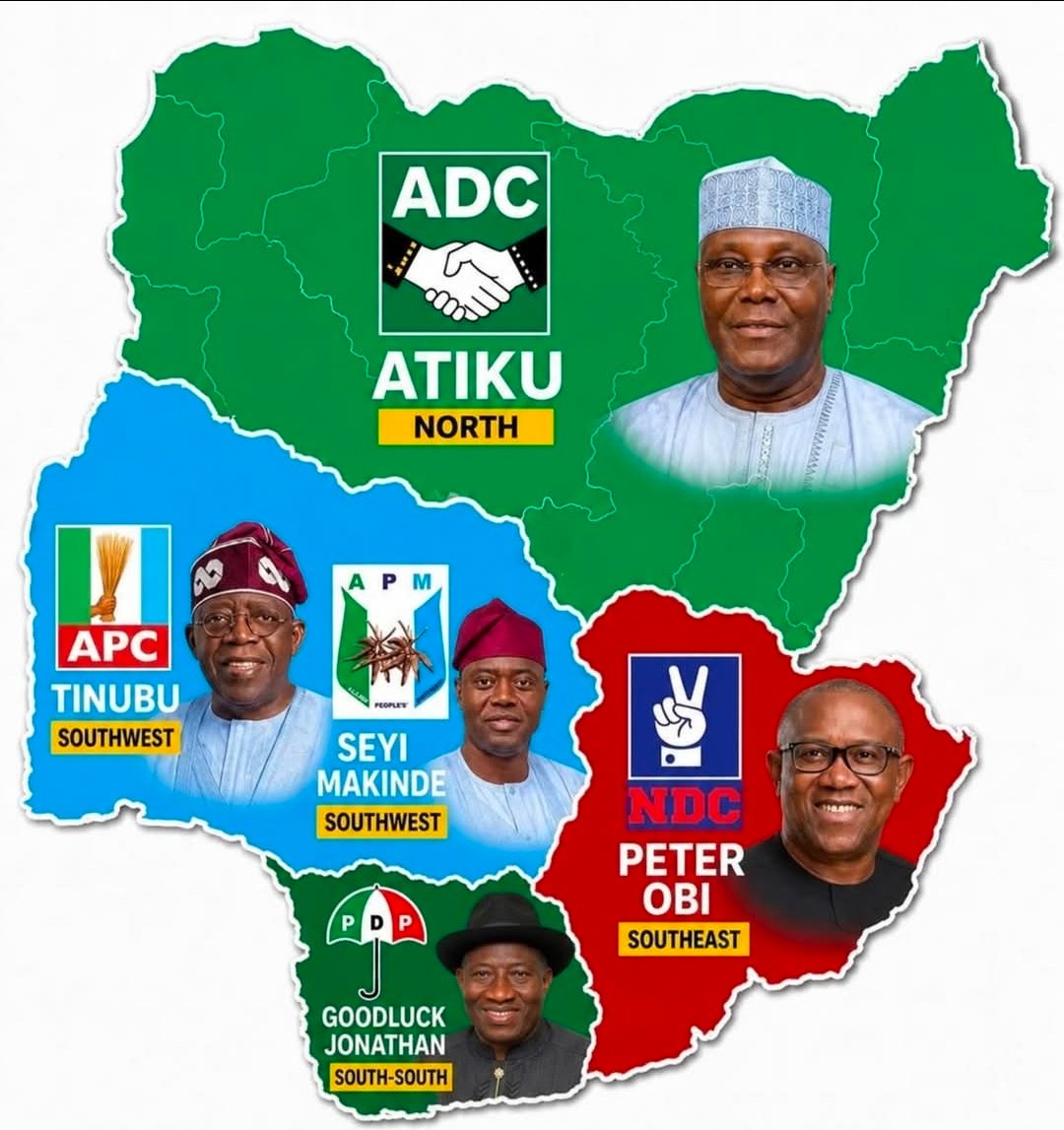
As political calculations ahead of the 2027 general election gather momentum, Nigeria’s power equation is gradually taking shape, with early alignments pointing toward what may become a fierce battle between a lone northern heavyweight and a crowded field of southern contenders.
At the centre of the unfolding conversation is former Vice President Atiku Abubakar, who is expected to fly the flag of the African Democratic Congress in what many observers believe could be his final shot at the presidency.
But unlike previous elections where the contest was largely between two dominant candidates, 2027 is already shaping into a politically complicated battlefield.
From the South, President Bola Ahmed Tinubu is expected to seek re-election under the All Progressives Congress despite growing economic dissatisfaction, rising cost of living and mounting public frustration over insecurity and hardship across the country.
Former Labour Party presidential candidate, Peter Obi, whose popularity surged massively during the 2023 election cycle, is also expected to remain in the race, this time reportedly under the National Democratic Coalition platform as efforts continue to build a broader opposition movement around his candidacy.
In the Peoples Democratic Party, attention is gradually shifting toward former President Goodluck Jonathan, whose possible return to frontline politics is already generating conversations across the country.
Though Jonathan has yet to make any formal declaration, speculations around his interest continue to gain traction within sections of the PDP and the wider political class.
Oyo State governor, Seyi Makinde, is also being linked with a possible presidential ambition under the Allied Peoples Movement, further expanding the growing list of southern political actors expected to influence the 2027 race.
With multiple southern contenders positioning themselves across different political platforms, analysts say the election could eventually evolve into a referendum on zoning, regional power balance and the future direction of Nigeria’s democracy.
For many northern political stakeholders, Atiku’s candidacy represents more than personal ambition. It is increasingly being framed as a continuation of the long-standing rotational power arrangement between North and South.
Supporters of the former Vice President argue that if President Tinubu completes a second term, the North would naturally expect power to return in line with the country’s informal zoning tradition.
Others, however, believe the political fragmentation within the South could create a unique opportunity for Atiku to emerge even before zoning arguments fully dominate the national conversation.
Yet, Nigerian politics has repeatedly shown that numbers alone do not determine victory.
Tinubu still controls the advantages of incumbency and the extensive grassroots machinery of the APC. Obi retains a strong youth-driven support base that remains highly active across urban centres and social media.
Jonathan’s potential return could attract sympathy from Nigerians nostalgic about relative economic stability during his administration, while Makinde continues to gain recognition as one of the more influential governors within the opposition space.
What makes the emerging political landscape even more unpredictable is the growing frustration among ordinary Nigerians. Across the country, economic hardship, inflation, unemployment and insecurity are rapidly overshadowing traditional political loyalties.
For many voters, 2027 may become less about party structures and more about competence, credibility and the ability to reconnect with a population battling daily economic pressure.
Still, regional and identity politics remain deeply rooted in Nigeria’s democratic culture. With five southern political figures already linked to the race and Atiku standing as the most prominent northern contender, the debate over whose “turn” it is may continue to dominate political conversations in the coming months.
As consultations intensify quietly behind closed doors, one thing is already clear: the road to 2027 will not only test the strength of political parties and candidates, but also Nigeria’s fragile balance between regional interests, democratic expectations and national survival.

-

 Inside Nigeria2 days ago
Gov Alia names Mathematics Education scholar Eunice Ogbenyi acting HoS of Benue State
-

 Sports1 day ago
BREAKING: Football shock as Rivers United Bus crashes en route to President’s Cup match
-
 Inside Nigeria2 days ago
Oyo Kidnapping: Obi, Senate call for urgent action on victims’ release
-

 Inside Nigeria2 days ago
₦7.4bn/km Coastal road project completed in Rivers State — Julius Berger
-
 National News1 day ago
Tinubu fills NDDC board vacancy with nomination of Zainab Marwa
-

 Editorials11 hours ago
Panic across Nigeria as fake school attack rumours trigger mass evacuation in FCT, Ogun, Oyo and Kwara
-
 Inside Nigeria1 day ago
Daily Times at 100: Publisher commits N100m to NUJ infrastructure project
-
 Inside Nigeria11 hours ago
NSITF targets AI impact on Gig Workers, Platform Economy