
Inside Nigeria
NSITF enrols over 7.6 Million workers in compensation scheme, brings Police on board

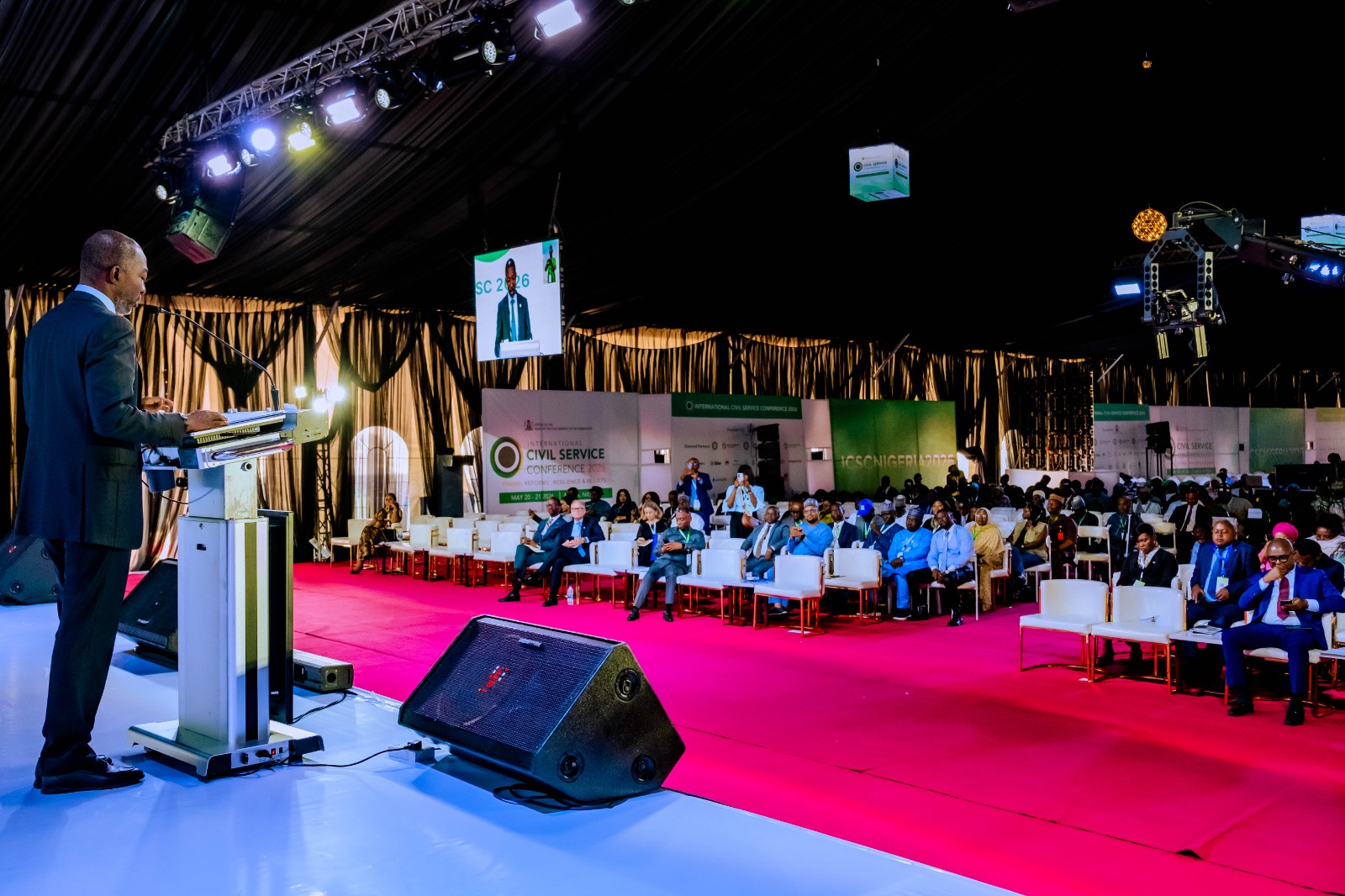
The Nigeria Social Insurance Trust Fund (NSITF) has disclosed that more than 7.6 million Nigerian workers have been enrolled in the Employees’ Compensation Scheme (ECS), while also announcing the historic enrolment of the Nigeria Police Force into the social protection programme.
Managing Director and Chief Executive Officer of NSITF, Barrister Oluwaseun Falaye, made the disclosure at the 2026 International Civil Service Conference held in Abuja.
Falaye described the inclusion of the Nigeria Police Force in the scheme as a landmark achievement, saying it followed strategic engagements with the Inspector-General of Police.
> “We have enrolled over 7.6 million employees into the Scheme. We secured the enrolment of the Nigeria Police Force into the ECS — a historic first — after engagements with the Inspector-General of Police.
> “When our officers know that their families will be protected should they sustain injury or lose their lives in the line of duty, their confidence and gallantry will increase, and our national security will be safer for us all,” he said.
Speaking on the conference theme, “Reforms, Resilience and Results,” Falaye said public institutions must evolve, innovate and remain responsive to the needs of citizens amid growing technological and economic changes.
According to him, the NSITF has embarked on far-reaching reforms since he assumed office on July 15, 2024, to reposition the Employees’ Compensation Scheme and improve service delivery.
Anti-Corruption, Digital Reforms
The NSITF boss said the Fund partnered with the Independent Corrupt Practices and Other Related Offences Commission (ICPC) to strengthen transparency and accountability mechanisms.
He disclosed that 120 staff members have been designated as Anti-Corruption and Transparency Unit (ACTU) liaison officers across NSITF offices nationwide.
Falaye also highlighted ongoing digital transformation initiatives aimed at replacing manual processes with automated systems.
> “We are investing in automated workflows, real-time tracking of claims, and standardised processing timelines. Our goal is simple: no Nigerian worker or their family should have to endure unnecessary delays when they are entitled to compensation under the law,” he said.
Expansion of Coverage
To increase compliance and coverage, Falaye said the Fund intensified engagements with state governments and employers across the country.
He revealed that NSITF signed a landmark partnership with the Lagos State Government in April 2026 to fully implement the Employees’ Compensation Scheme for state workers.
The Fund is also advocating the integration of ECS compliance certificates into public procurement processes to ensure workers’ protection becomes a prerequisite for government contracts.
N239.5 Million Paid to Workers, Families
On compensation payments, Falaye disclosed that NSITF processed 22,350 compensation claims in 2024, recording a 21 per cent increase in payouts.
Among notable payments were:
₦90 million compensation to a Seplat worker.
₦76 million to dependants of a Nigerian Breweries employee.
₦31 million in medical expenses for a Nestlé worker.
₦42.5 million to the family of a deceased Depthwize employee.
> “These are not just numbers — these are families who received justice, dignity and support in their most difficult moments,” he stated.
Workplace Safety and Worker Protection
Falaye noted that NSITF partnered with the Nigeria Employers’ Consultative Association (NECA) and the Nigeria Labour Congress (NLC) under the 2025 Safe Workplace Intervention Project (SWIP), auditing more than 200 workplaces nationwide.
He added that the Federal Government has now made the Employees’ Compensation Scheme mandatory for all federal public servants.
According to him, protecting workers through occupational safety measures and social insurance remains critical to governance reforms and national development.
> “When workers are protected, productivity improves. When institutions are stable, economies grow. When citizens trust public systems, national cohesion is strengthened,” he said.
Falaye stressed that the changing nature of work driven by digitalisation, artificial intelligence and remote work arrangements requires governments to proactively build stronger social protection systems capable of addressing future risks and challenges.

-

 Inside Nigeria2 days ago
Gov Alia names Mathematics Education scholar Eunice Ogbenyi acting HoS of Benue State
-

 Sports1 day ago
BREAKING: Football shock as Rivers United Bus crashes en route to President’s Cup match
-

 Inside Nigeria2 days ago
Oyo Kidnapping: Obi, Senate call for urgent action on victims’ release
-

 Inside Nigeria2 days ago
₦7.4bn/km Coastal road project completed in Rivers State — Julius Berger
-

 National News1 day ago
Tinubu fills NDDC board vacancy with nomination of Zainab Marwa
-

 Inside Nigeria1 day ago
Daily Times at 100: Publisher commits N100m to NUJ infrastructure project
-

 Editorials10 hours ago
Panic across Nigeria as fake school attack rumours trigger mass evacuation in FCT, Ogun, Oyo and Kwara
-

 Inside Nigeria10 hours ago
NSITF targets AI impact on Gig Workers, Platform Economy