
Inside Nigeria
Health advocates warn FG against fortifying ultra-processed foods

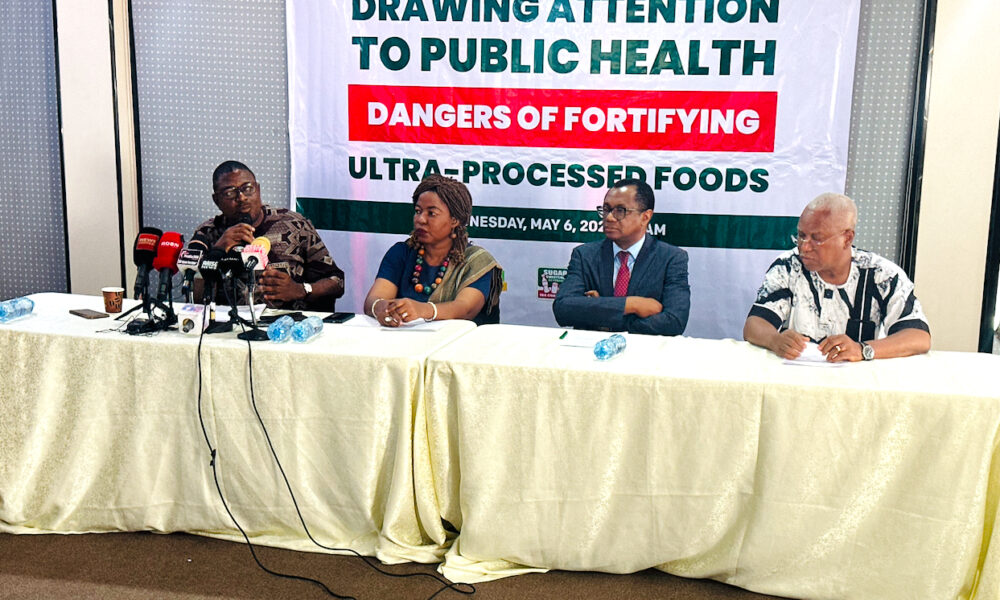
Public health advocates under the Coalition for Healthy Food Advocacy and the National Sugar-Sweetened Beverages Tax Coalition (NSSBTC) have cautioned the Federal Government against fortifying ultra-processed foods, warning that the policy could worsen the growing burden of diet-related diseases in Nigeria.
Speaking at a press conference in Abuja, the groups urged authorities to reassess the country’s fortification strategy to ensure nutrition policies do not unintentionally encourage unhealthy eating habits.
A Technical Advisor at the Network for Health Equity and Development (NHED), Dr. Jerome Mafeni, warned against the fortification of high-sodium products such as bouillon cubes, arguing that Nigerians already consume salt above recommended health limits.
“At this stage, Nigeria should not be advancing bouillon fortification. We must first reduce sodium exposure across the population, implement mandatory salt targets, establish clear and effective labelling, and strengthen regulatory enforcement,” he said.
Read Also: UTME 2026: How to check your JAMB result easily: complete guide for candidates
Also speaking, the Executive Director of Corporate Accountability and Public Participation Africa (CAPPA), Akinbode Oluwafemi, said while food fortification remains an important public health strategy, it should only apply to genuinely healthy food options.
“The path to a healthier Nigeria lies in building a food system that values real food, diverse, locally sourced, and nutritionally sound.
Fortifying poison does not make it medicine,” he said.
Oluwafemi warned that fortifying products such as seasoning cubes, instant noodles, and sugary cereals could create the false impression that such foods are healthy for regular consumption.
A lead researcher at the University of Abuja, Dike Ojji, highlighted the increasing prevalence of cardiovascular diseases in the country, noting that hypertension affects up to 30 per cent of Nigerians.
“The burden of cardiovascular disease is inextricably linked to poor diet and lifestyle choices,” he said, calling for stronger policies to limit excessive salt, trans-fats, and ultra-processed foods.
Ojji also advocated improved health insurance coverage to make treatment for conditions such as hypertension and diabetes more affordable.
The Executive Director of the Keen and Care Initiative, Josephine Alabi, commended government efforts to tackle non-communicable diseases but urged policymakers to avoid unintended public health consequences, especially among vulnerable groups.
The coalition called on the Federal Ministry of Health, National Agency for Food and Drug Administration and Control, and Standards Organisation of Nigeria to review the current policy direction and prioritise efforts aimed at reducing sodium consumption by 30 per cent before 2030.

-

 Inside Nigeria2 days ago
Gov Alia names Mathematics Education scholar Eunice Ogbenyi acting HoS of Benue State
-

 Sports1 day ago
BREAKING: Football shock as Rivers United Bus crashes en route to President’s Cup match
-

 Inside Nigeria2 days ago
Oyo Kidnapping: Obi, Senate call for urgent action on victims’ release
-

 Inside Nigeria2 days ago
₦7.4bn/km Coastal road project completed in Rivers State — Julius Berger
-

 National News1 day ago
Tinubu fills NDDC board vacancy with nomination of Zainab Marwa
-

 Editorials9 hours ago
Panic across Nigeria as fake school attack rumours trigger mass evacuation in FCT, Ogun, Oyo and Kwara
-

 Inside Nigeria1 day ago
Daily Times at 100: Publisher commits N100m to NUJ infrastructure project
-

 Inside Nigeria9 hours ago
NSITF targets AI impact on Gig Workers, Platform Economy