
World
Tension rises across South Africa as anti-immigrant protests intensify

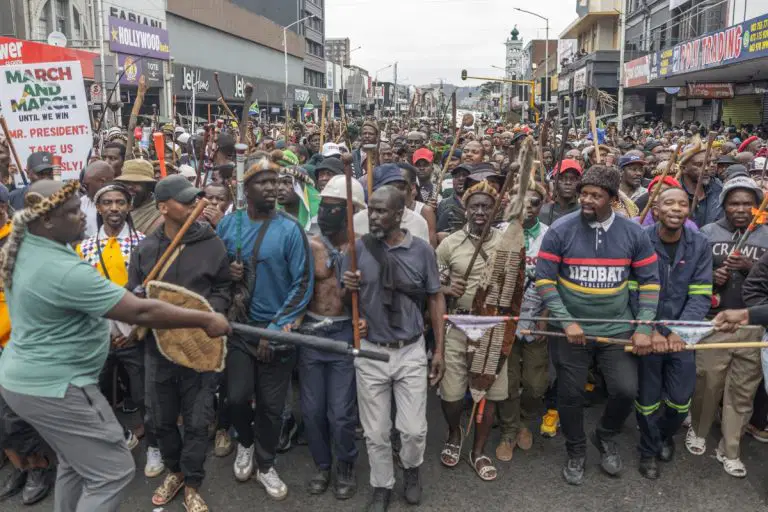
Thousands of demonstrators filled the streets in several South African cities on Tuesday, calling for undocumented foreign nationals to leave the country following weeks of anti-immigrant protests that have displaced many people and reportedly claimed four lives.
Security was tightened nationwide as police officers were deployed to monitor the demonstrations, which marked the end of a campaign organised by citizen-led vigilante groups. The groups had given undocumented migrants until June 30 to leave South Africa.
While most of the protests remained peaceful, some areas recorded isolated cases of looting, stone-throwing and confrontations.
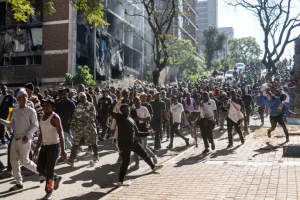
Near Johannesburg, security officials escorted a small group of foreign nationals to safety after an angry crowd carrying large sticks confronted them.
Large groups of protesters marched through central Johannesburg, South Africa’s financial hub. Most businesses remained closed, many workers stayed away from their jobs, and major transport centres recorded little activity as the demonstrations continued.
They waved flags and placards, watched by police in bulletproof jackets and riot helmets.
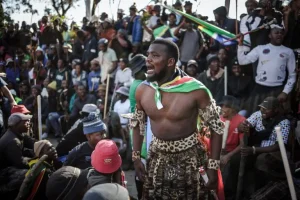
In the southeastern city of Durban, the Zulu heartland, protesters turned out in traditional warrior attire, carrying spears, whips and shields and some draped in leopard skins.
Demonstrator Brightness Gumbi, 48, said she was frustrated at not being able to afford to rent a premises for her business while foreign nationals were able to run shops.
“The illegal foreigners manage to pay it because they sell drugs to our people,” she told AFP. “I hope through these demonstrations our president will hear our cries and enforce stricter laws.”
In tourist magnet Cape Town, only about 100 people joined a march through the city centre, passing a counterprotest against Afrophobia and xenophobia.
– ‘Mass deportation’-
One of the continent’s wealthiest countries, South Africa is a magnet for migrant labour while grappling with an unemployment rate above 30 percent, high crime and a breakdown in services in many areas.
Groups mobilising against illegal immigrants say they take jobs and services from locals, claims that analysts say is unfairly scapegoating foreign nationals for government failures.
“South Africans have been replaced by illegal foreigners, increasing unemployment,” the leader of the anti-immigrant March and March group, Jacinta Ngobese-Zuma, told a crowd in Durban.
“We want mass deportation,” she said. “For the next six months we want the government to get rid of the people who have not left.”
At least two Mozambicans, an Ethiopian and a Malawian have been killed in the latest outburst of anti-immigrant violence, according to police.
Several African governments — including Nigeria, Malawi, Ghana, Zimbabwe and Mozambique — have organised voluntary repatriation flights and buses for their citizens.
South Africa has seen previous flare-up of violence targeting undocumented foreign nationals, but this is the first time governments have simultaneously organised repatriations.
More than 25,000 people had been processed for departure in recent weeks, authorities said Monday.
– ‘I’m scared’ –
As the protests unfolded in several cities, hundreds of migrants — mostly Malawians and Zimbabweans — gathered in Cape Town, Johannesburg and other centres, waiting for assistance to go home.
Some said their landlords had evicted them or their employers had fired them, fearing fines from officials or attacks by vigilante groups.
“The people in South Africa, they don’t want us here. I’m scared,” said a 23-year-old Zimbabwean woman, who asked to remain anonymous, where around 2,000 people were waiting for buses.
Only a few dozen Malawians remained at a site in Durban from where several thousand had been bused out in recent days, either taken back to their country or to a processing site near the border with Zimbabwe.
“I thought I could stay on but neighbours warned us last night,” 32-year-old Adam John told AFP. “I felt that it is better to try and get home while I still can.”
– ‘Weaponised’ –
Concerned about a repeat of unrest five years ago when around 350 people were killed in days of looting and riots, the government put in place a massive security deployment for Tuesday’s mobilisation.
President Cyril Ramaphosa announced stepped-up government plans to combat illegal immigration and called on traditional leaders to use their “standing to calm tensions”.
Coming ahead of local government elections in November, the anti-migrant push has been “politically weaponised”, labour analyst Dale McKinley said.
Previous anti-foreigner riots in South Africa have proved deadly. In 2008, violence left 62 people dead.







-
 Politicians3 days ago
2027: Obi dares Tinubu to public debate
-

 Politicians2 days ago
NDC: Trending CTC of judgment show’s court has sacked Obi’s new party
-
 Inside Nigeria2 days ago
Governor Otu says parents’ values shape his people-first style of governance
-

 Inside Nigeria3 days ago
NUJ FCT Chairman Grace Ike bags Silent Hero in Management Award, reaffirms commitment to ethical journalism
-

 National News1 day ago
Tinubu approves major NYSC reform as FEC moves to overhaul scheme
-

 Sports1 day ago
Kai Havertz, others miss penalties as Paraguay knock Germany out of World Cup
-
 National News1 day ago
Tinubu may visit Washington before end of tenure, says Nigerian envoy
-
 Inside Nigeria2 days ago
Troops repel attempted attack on NIPSS in Plateau