
Inside Nigeria
As Senate President, I scrutinised Buhari’s loan requests but paid a political price for it — Saraki

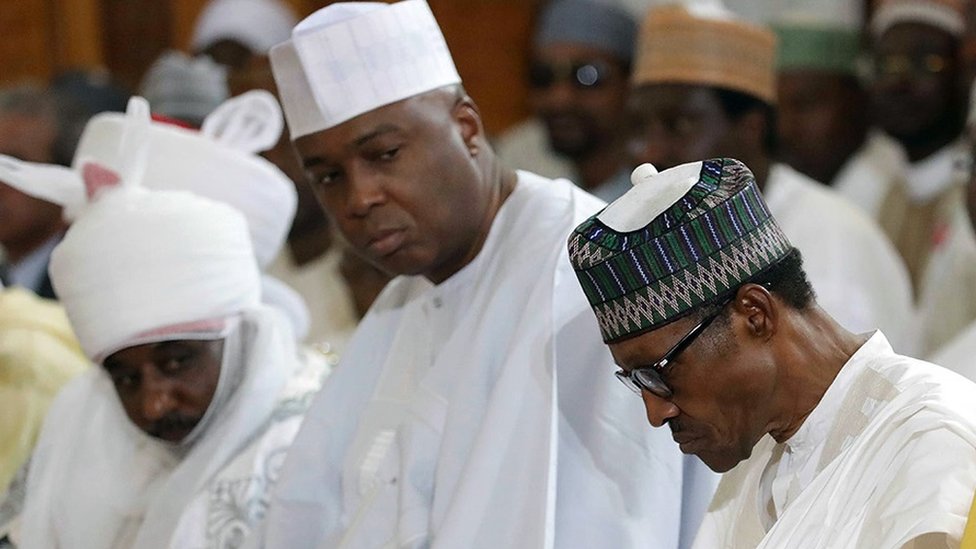
Former Senate President Bukola Saraki has disclosed that he faced significant political resistance after insisting on proper scrutiny of foreign loan requests during the administration of late former President Muhammadu Buhari.
Saraki said the pushback came as he sought greater transparency and accountability in the approval of external borrowing while serving as Senate President between 2015 and 2019.
He made the disclosure on Tuesday while speaking at the Global Strategic Advisory Group meeting held at Villa La Collina during a panel discussion titled, “Development Policies—Withdrawal of the U.S. from International Development: Opportunities and Challenges.”
Reflecting on his time as head of the National Assembly, the former Kwara State governor said Nigeria’s long-term economic stability depends on stronger domestic revenue generation and prudent fiscal management.
According to him, one of the country’s major economic challenges is its low tax-to-GDP ratio, warning that Nigeria cannot continue relying heavily on foreign borrowing to fund development.
Saraki explained that his leadership prioritised fiscal discipline by introducing reforms aimed at improving transparency in government finances.
“During my tenure as Senate President, we placed strong emphasis on fiscal oversight, introducing open budget hearings, confronting the issue of unremitted revenues held outside the treasury system, and working on petroleum sector governance reform.
“These were not easy fights. But they were necessary ones, because the alternative is permanent external dependency.
“I experienced this firsthand when, as Senate President of Nigeria, I challenged the executive on foreign loan approvals and received significant political push-back because the system was not designed to support proper scrutiny of purpose or impact.
“Many of these loans were accepted as if they were free gifts, yet repayment obligations remained,” he said.
Saraki’s remarks offer fresh insight into the often strained relationship between the executive and legislative arms of government during the Buhari administration, particularly over issues relating to public borrowing and fiscal accountability.
He also urged African countries to build more resilient and self-sustaining economies by strengthening internal revenue generation and reducing dependence on external financial assistance.

-
 Politicians2 days ago
NDC: Trending CTC of judgment show’s court has sacked Obi’s new party
-
 Politicians3 days ago
2027: Obi dares Tinubu to public debate
-
 Inside Nigeria3 days ago
Governor Otu says parents’ values shape his people-first style of governance
-

 National News2 days ago
Tinubu approves major NYSC reform as FEC moves to overhaul scheme
-

 Inside Nigeria3 days ago
NUJ FCT Chairman Grace Ike bags Silent Hero in Management Award, reaffirms commitment to ethical journalism
-
 National News3 days ago
Tinubu okays free CAC registration for 250,000 MSMEs across states
-

 Sports1 day ago
Kai Havertz, others miss penalties as Paraguay knock Germany out of World Cup
-
 World18 hours ago
US Supreme court declines Trump’s bid to restrict birthright citizenship